Visiting timetableClosed
|Monday, September 14, 2026Piazza San Marco, Venice, Italy
Back to travel
art
Pala d’Oro – Complete Visitor Guide
Everything about the Pala d’Oro in St. Mark’s: legends, layout, and expert viewing tips.
1/18/2025
12 min read
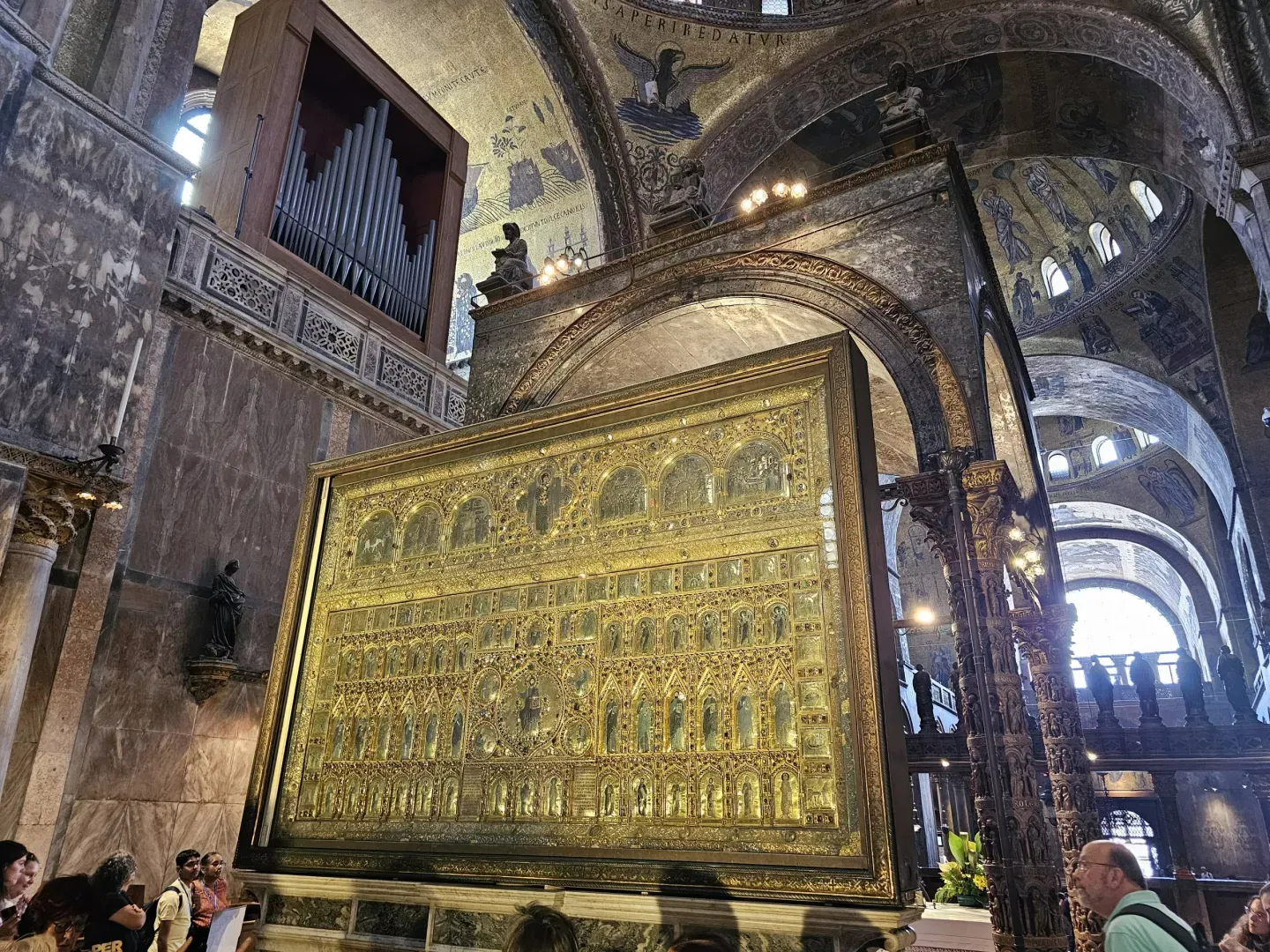
The Pala d’Oro is a jeweled encyclopedia of faith and politics. Its enamel panels glitter with imperial patronage and saintly narrative.
Table of Contents
What It Is
- A medieval retable set behind the high altar, layered over centuries.
- Cloisonné enamels, pearls, sapphires, rubies — portable prestige fixed in gold.
How to See It Best
- Pay the small add-on; worth every cent for proximity.
- Visit when crowds thin (opening or late afternoon).
- Move left-to-right, row-by-row; bring a pocket torch for raking light (if allowed).
Panels to Find First
- Christ Pantocrator at the center.
- Feast cycle enamels — tiny but explosive in color.
- Donor inscriptions hinting at patrons and politics.
Tip: Zoom photos later to “read” the cloison lines — they’re like handwriting.
Reading the Enamels
- Work left-to-right, top-to-bottom; note inscriptions around scenes.
- Compare faces and garments: workshop styles become recognizable.
- Look for donor names; politics is etched in gold here.
Etiquette at the Rail
- Keep voice low and dwell time reasonable for others.
- Disable flash; avoid touching the rail with bags or jackets.
FAQs
- Is the Pala d’Oro always open? — Access can vary; mornings are most reliable.
- Photo policy? — Discreet, no-flash photography may be allowed; follow staff guidance.
- How long to budget? — 10–20 minutes for a first pass; longer for close study.
Bottom Line
The Pala d’Oro compresses Venice’s ambition into a single glow — come close, then step back and let the whole blaze at once.
About the Author

Venice Art Guide
I put this guide together to make your St. Mark’s visit simple, insightful, and full of local tips.
Tags
Pala d’Oro
Goldwork
Relics
Byzantine
Comments (0)
Leave a Comment
Loading comments...