Gold mosaics and a skyward tower
Explore how Venice built a shining basilica and a calm beacon over its waters.
Table of Contents
Origins of St. Mark’s and the square
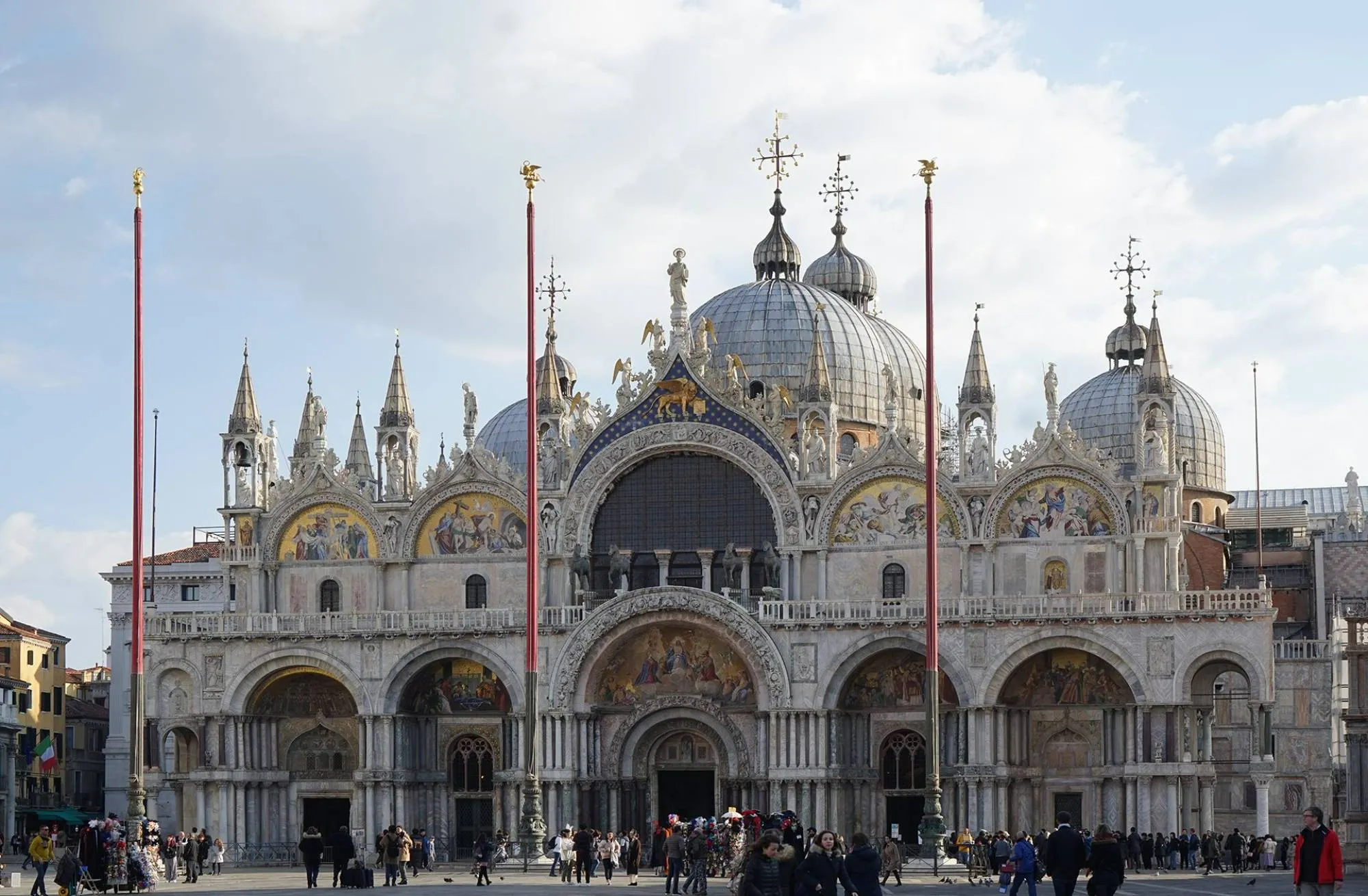
Legend tells that the relics of St. Mark the Evangelist reached Venice in the 9th century, carried from Alexandria and welcomed as a symbol of the city’s rising identity. Around them, a sanctuary grew, then a basilica, then the great stage of Piazza San Marco, where religion, politics, and everyday life intertwined.
Over centuries, the square became Venice’s open‑air living room: merchants haggled under arcades, officials proclaimed decrees, musicians played to the evening crowd. The basilica’s profile and the watchful bell tower anchored the city’s sense of place, and their stories became inseparable from Venice itself.
Building a Byzantine basilica
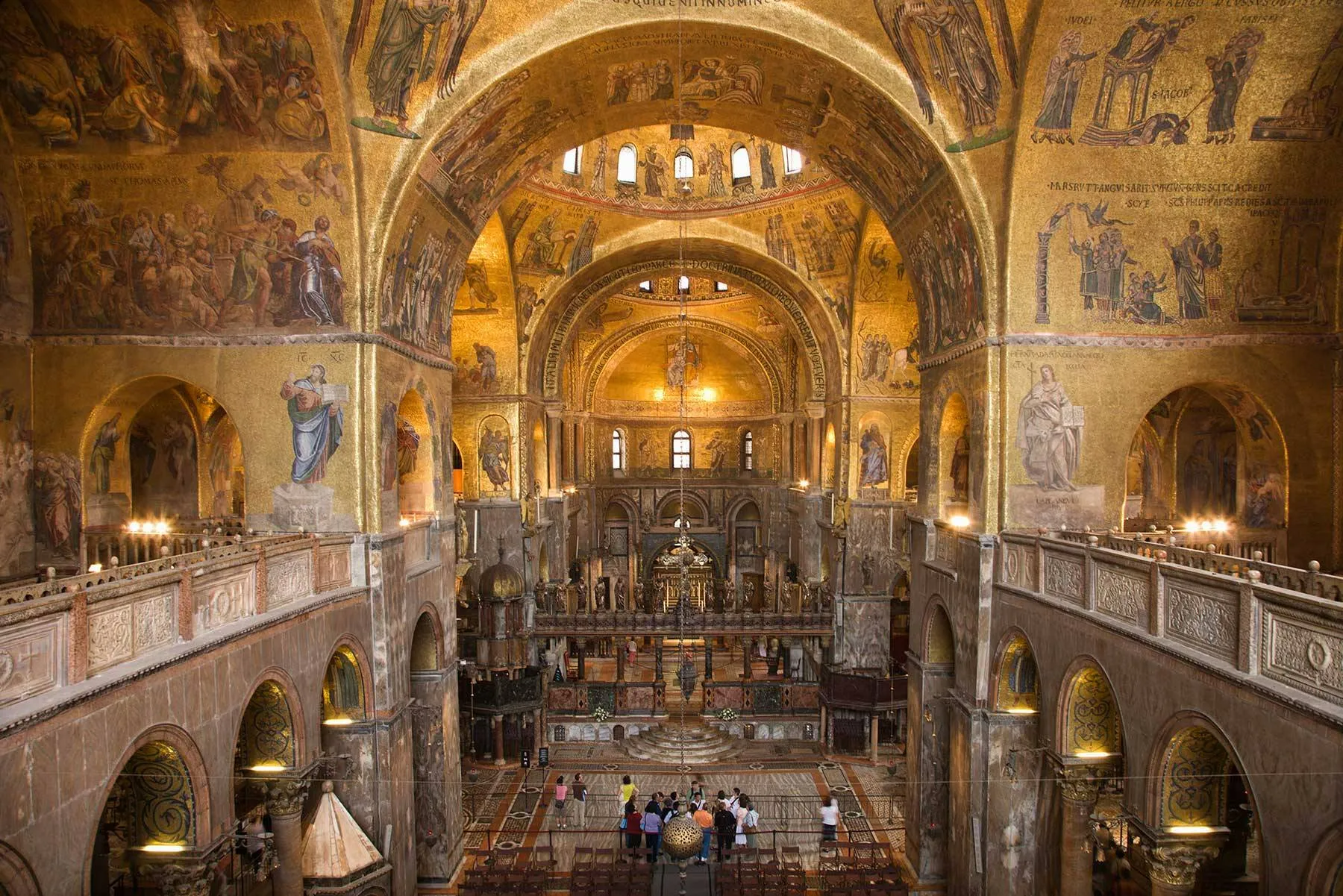
St. Mark’s isn’t a typical Italian cathedral. Rooted in Byzantine aesthetics, its five domes, golden interior, and intricate marble surfaces evoke connections to the Eastern Mediterranean and Venice’s seaborne empire. Craftsmen, mosaicists, and stonecutters worked across generations, enriching the church with images that shimmer like captured light.
The basilica’s fabric evolved with the city: new chapels, gilded vaults, and imported columns tell of trade routes and diplomatic gifts. The building became a living archive of Venice’s ambitions, faith, and artistry, reinterpreted with each generation that repaired, embellished, or carefully preserved its precious surfaces.
Mosaics, marble, and the Pala d’Oro
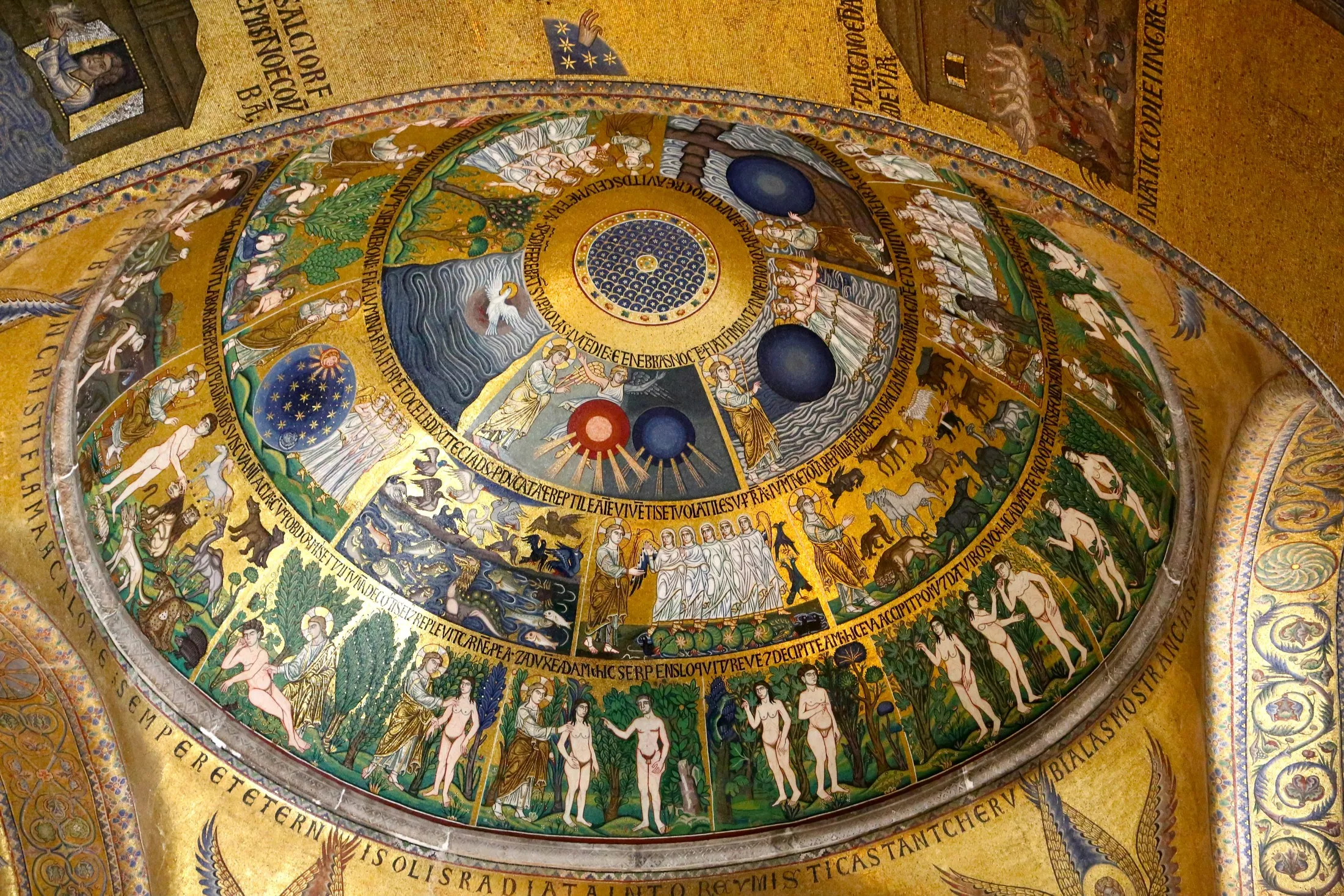
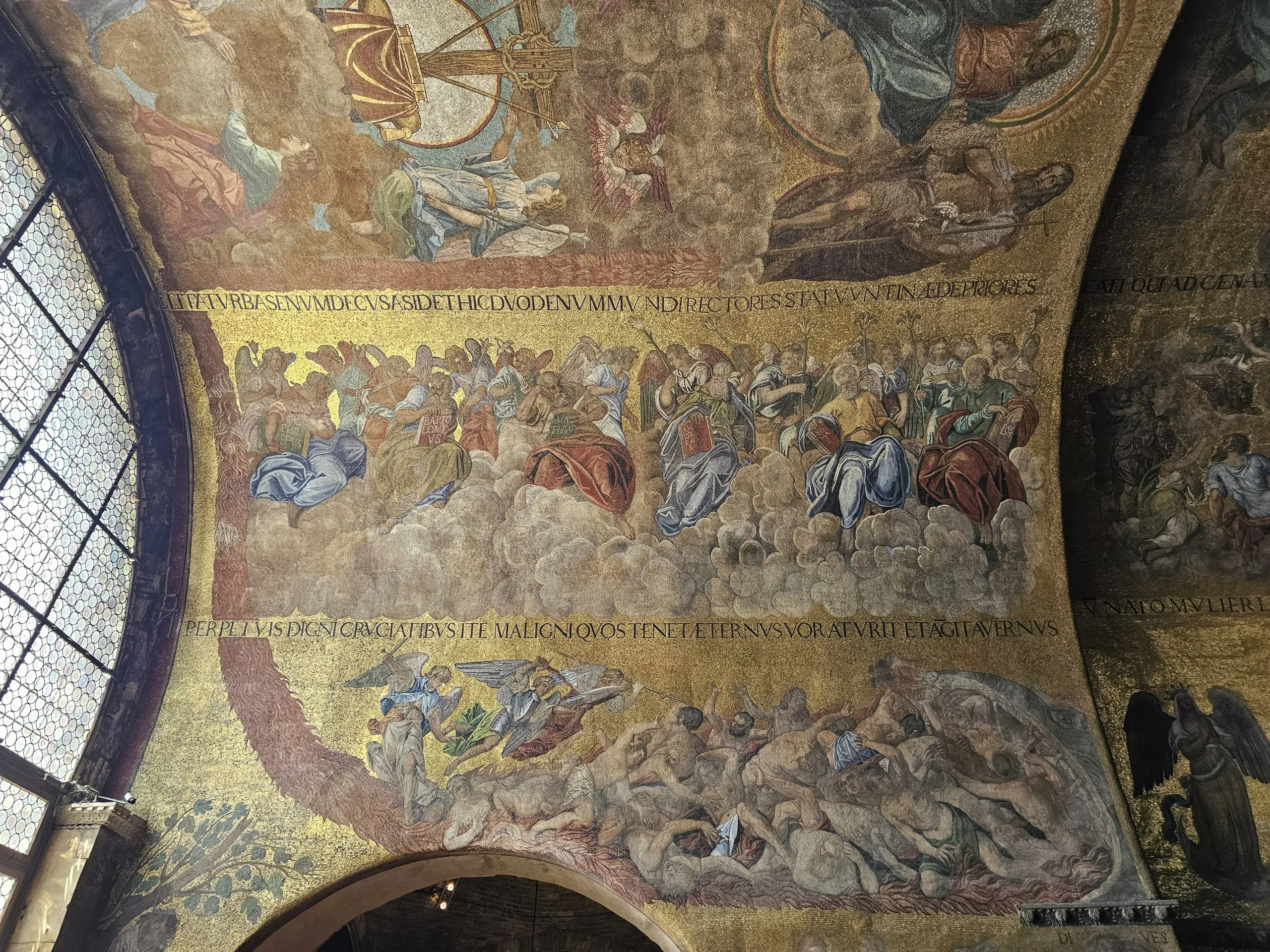
Inside, scenes gleam with tesserae — tiny glass and gold tiles forming biblical narratives, saints, and celestial patterns. Beneath your feet, a rippling marble pavement hints at the lagoon’s motion, while columns, capitals, and carved panels reveal a conversation between East and West.
The Pala d’Oro, a lavish altarpiece of gold and enamels, gathers delicate cloisons and precious stones into a single shimmering field. Its presence turns the sanctuary into a jewel‑box of light, an object of devotion and a masterwork of medieval craftsmanship.
The Campanile: rises, falls, and rises again
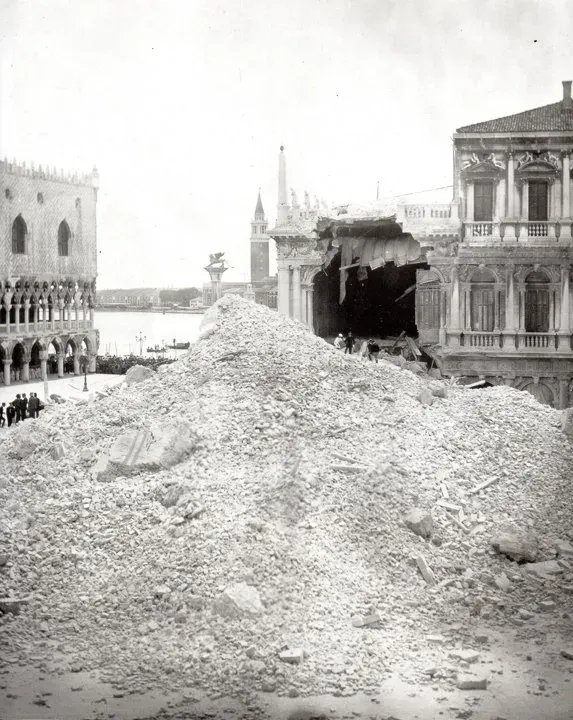
The Campanile stands slightly apart, a tranquil sentinel over the square. In 1902, after centuries of weather and subtle shifts, the tower collapsed — miraculously without major injury. Venice rebuilt it ‘as it was, where it was,’ and in 1912, the elevator brought visitors skyward once more.
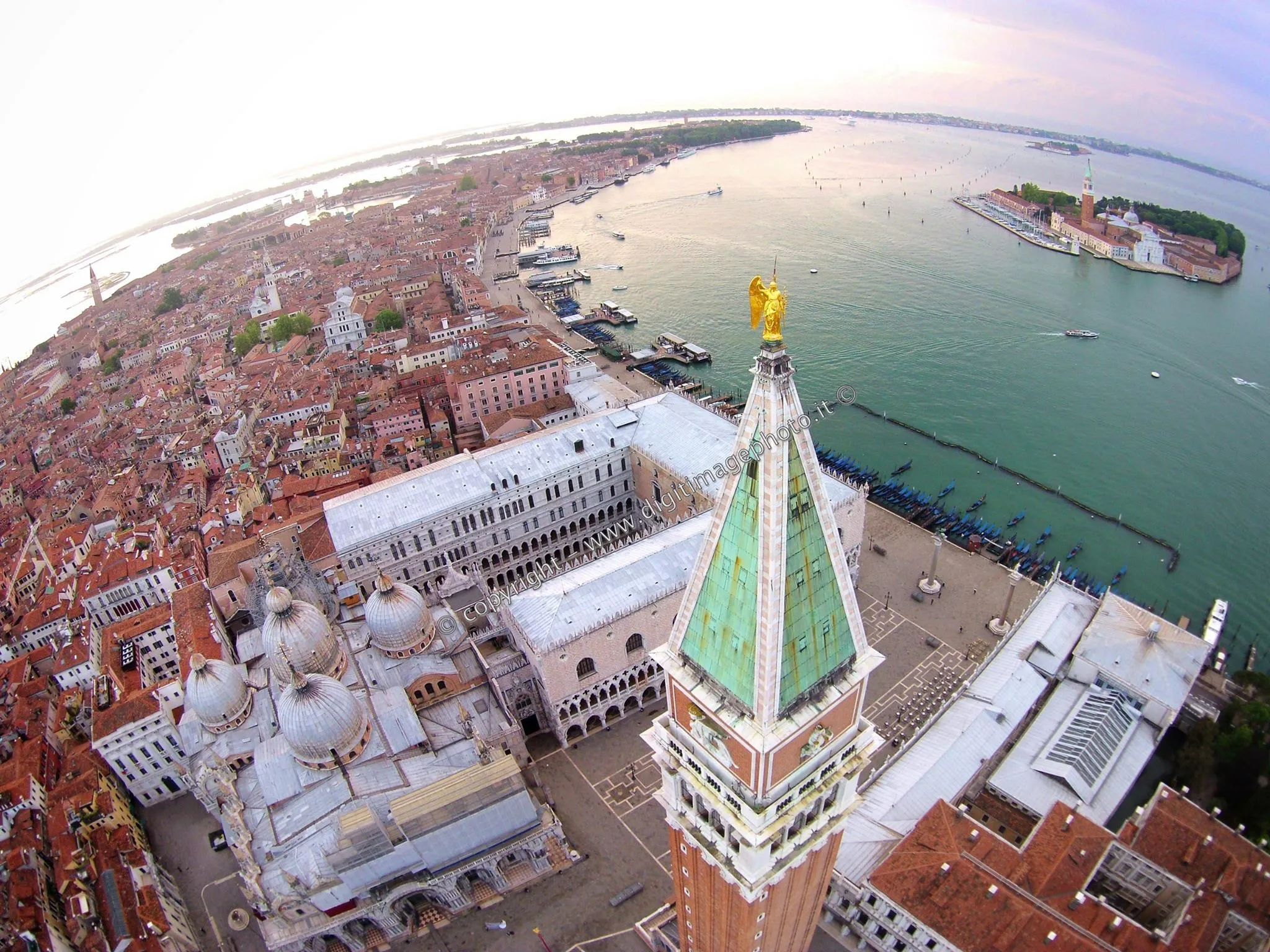
From the belfry, the city opens like a chart: domes cross‑hatched below, the Grand Canal winding, lagoon islands pricked by light. On clear days, the horizon seems infinite; on misty ones, Venice gathers close, intimate and dreamlike.
Horses of St. Mark and the loggia
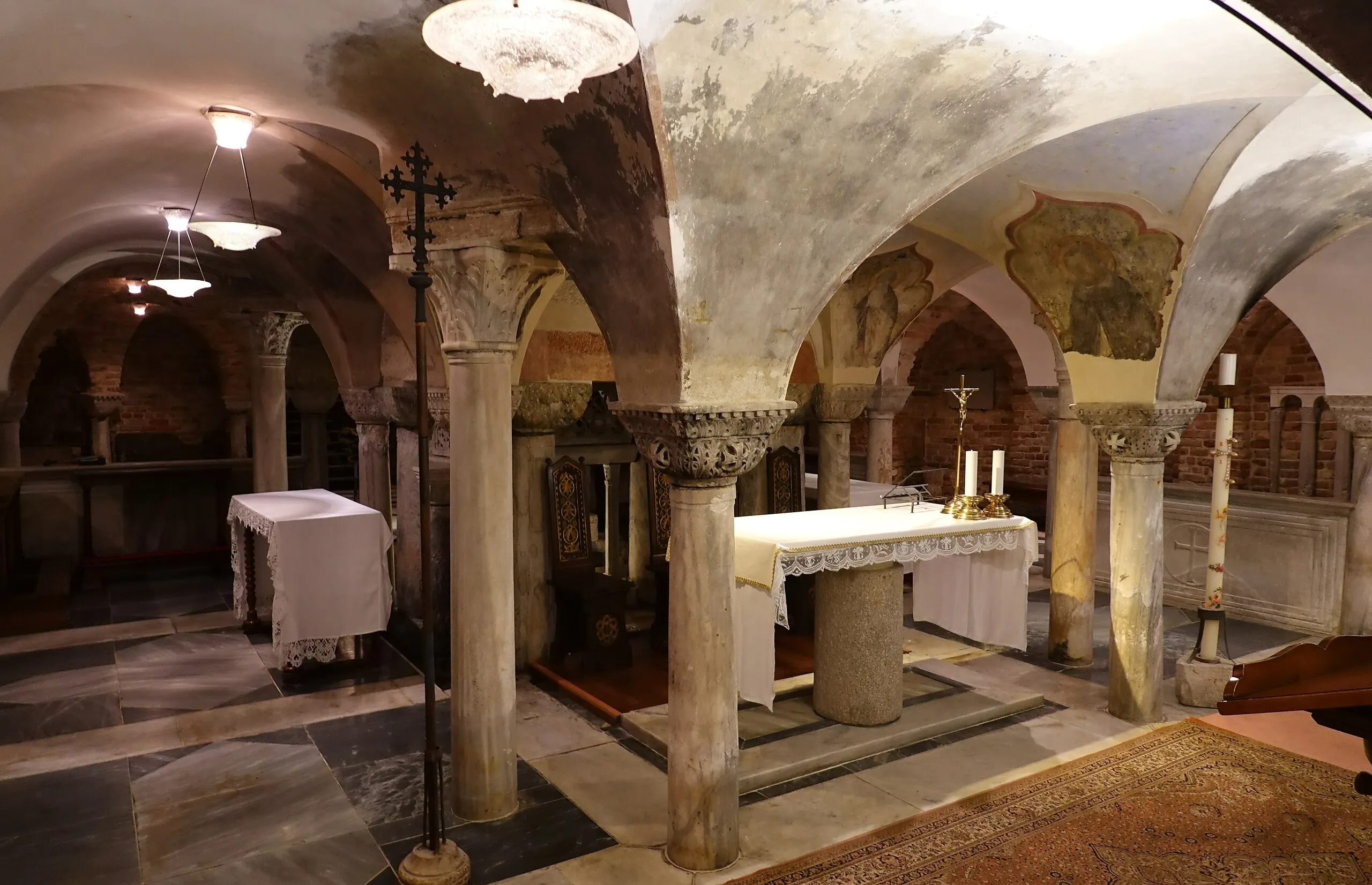
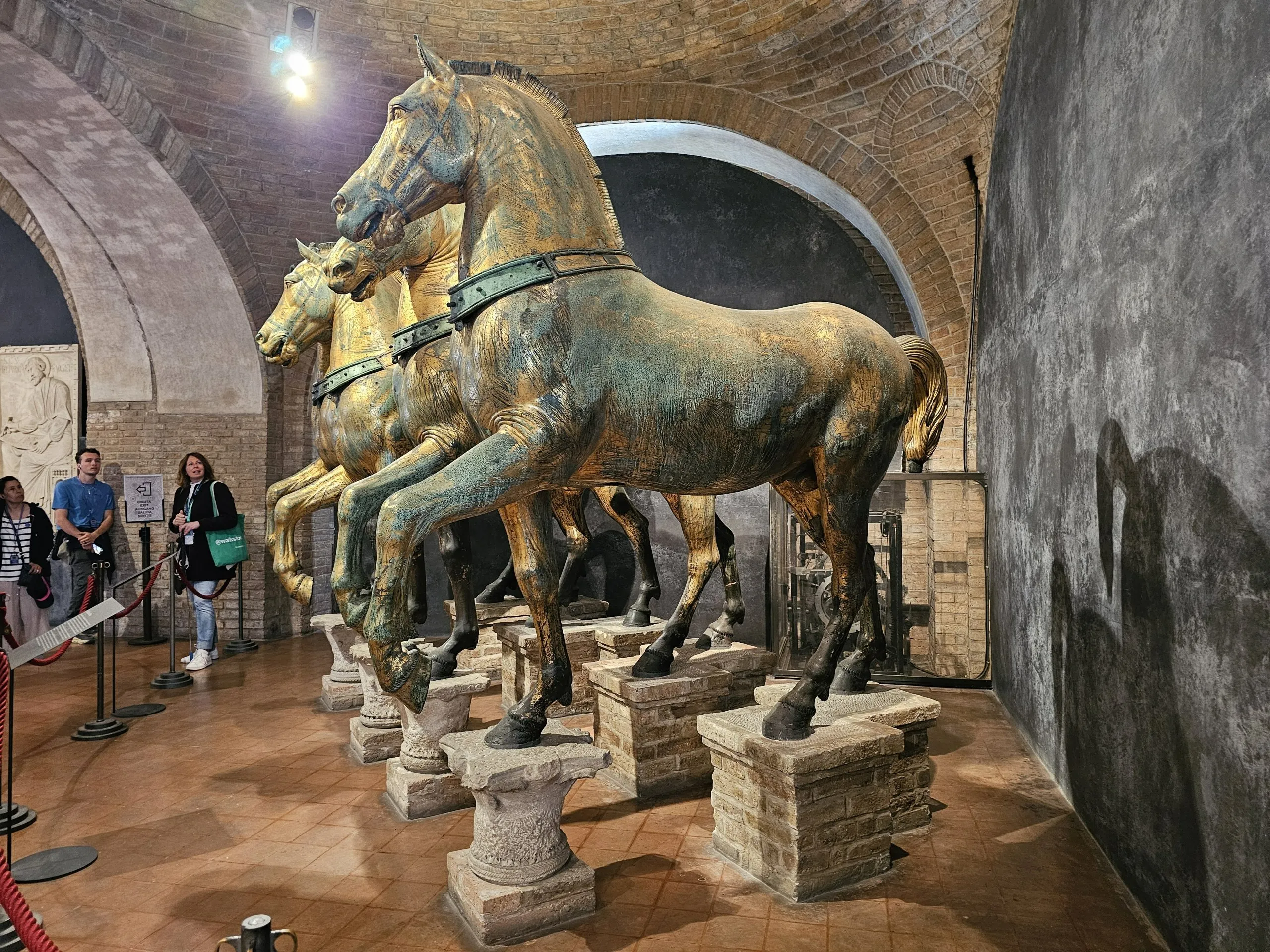
On the loggia, replicas of the bronze Horses of St. Mark gaze across the square. The originals — ancient and storied — are housed in the basilica’s museum. Their graceful forms hint at distant workshops and journeys through empires.
From the loggia, the square feels both grand and personal: a place of meetings and music, of pigeons and portraits, of everyday awe.
Ceremonies, processions, and city ritual
St. Mark’s hosted ceremonies that synchronized city and sea: blessings for sailors, processions for victories and losses, and rituals that wove governance with devotion. The basilica’s light turned civic moments into shared memory.
Even today, liturgies remind visitors that St. Mark’s is a living church. Respectful quiet, modest dress, and an attentive gaze make space for those who come to pray.
Piazza San Marco: power and everyday life
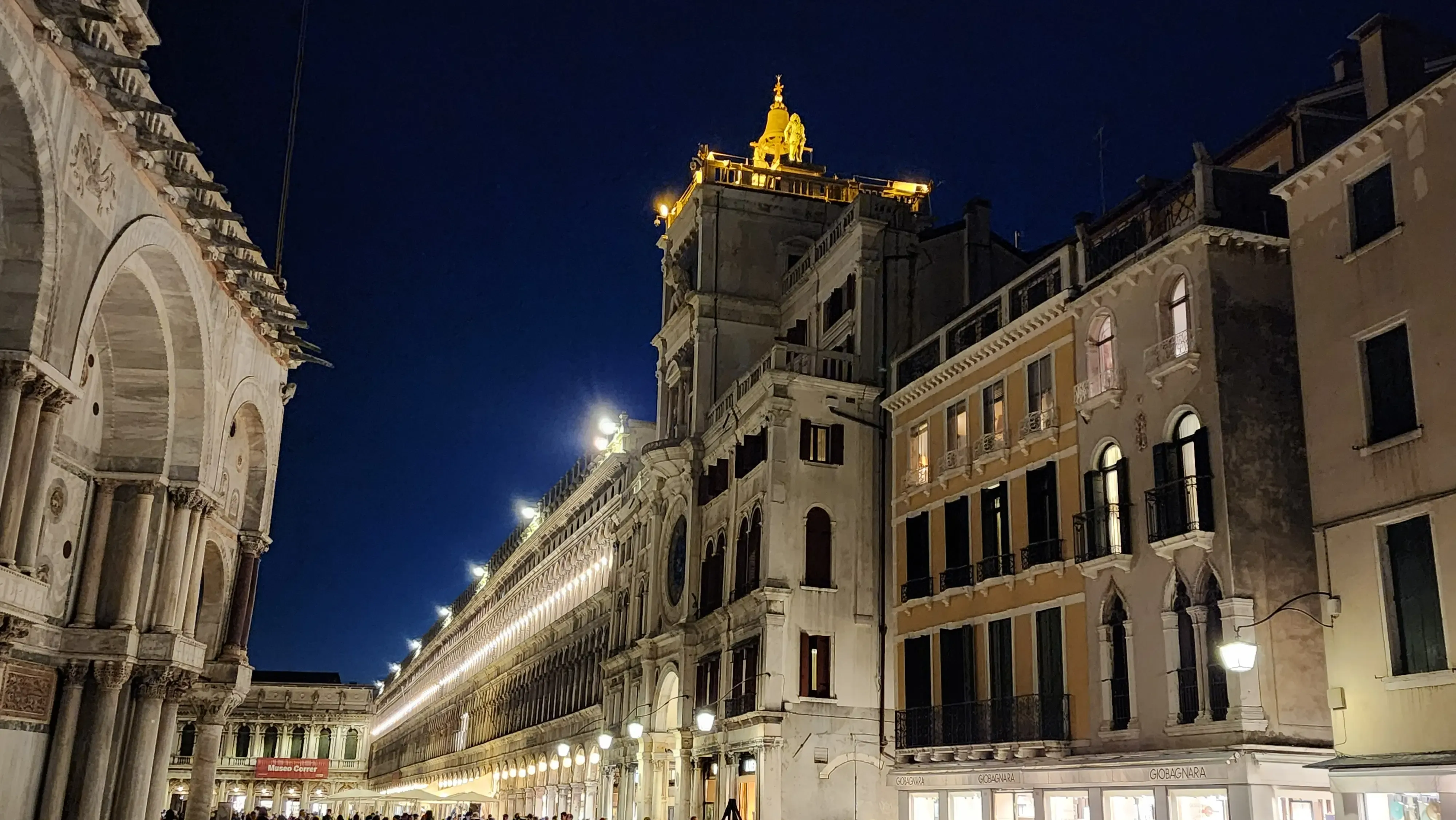
Around the basilica, the Doge’s Palace held councils and courts, orchestras played under cafés, and travelers gathered stories before pushing off into the Adriatic. Venice’s rituals unfolded here, against façades gilded by evening light.
The square is still Venice’s living room: a place to linger, listen, and watch the city be itself — unhurried, musical, and gently theatrical.
Acqua alta, maintenance, and accessibility
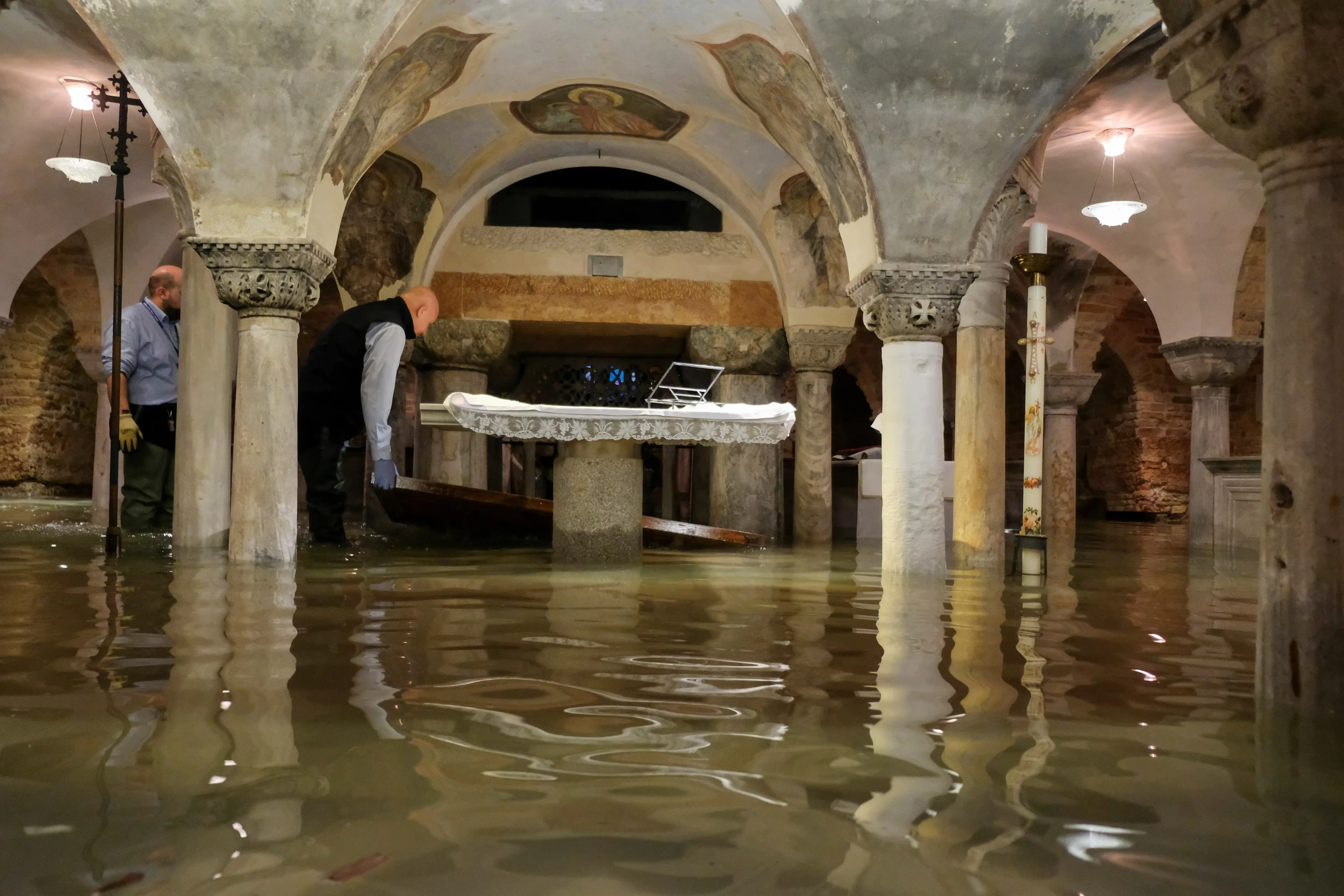
During acqua alta (high water), raised walkways may guide visitors across the square and into the basilica. Schedules can shift for safety, and some areas may close temporarily.
Accessibility is generally good: the Campanile has an elevator, and staff assist with basilica access. Some thresholds and narrow passages remain part of the historic fabric.
Art, music, and cultural echoes
Cafés and orchestras set a gentle soundtrack to the square. In the basilica, sacred music and the glow of mosaics create a hushed, resonant atmosphere.
Exhibitions and scholarly work continue to deepen our understanding of St. Mark’s — its art, its rituals, and its role in the city’s memory.
Visiting today: tickets and timings
Book Campanile tickets and basilica special areas online to secure your preferred time and reduce waiting.
Combined visits with the Doge’s Palace are popular and efficient — consider them if you want a fuller picture of Venice.
Conservation, respect, and sustainability
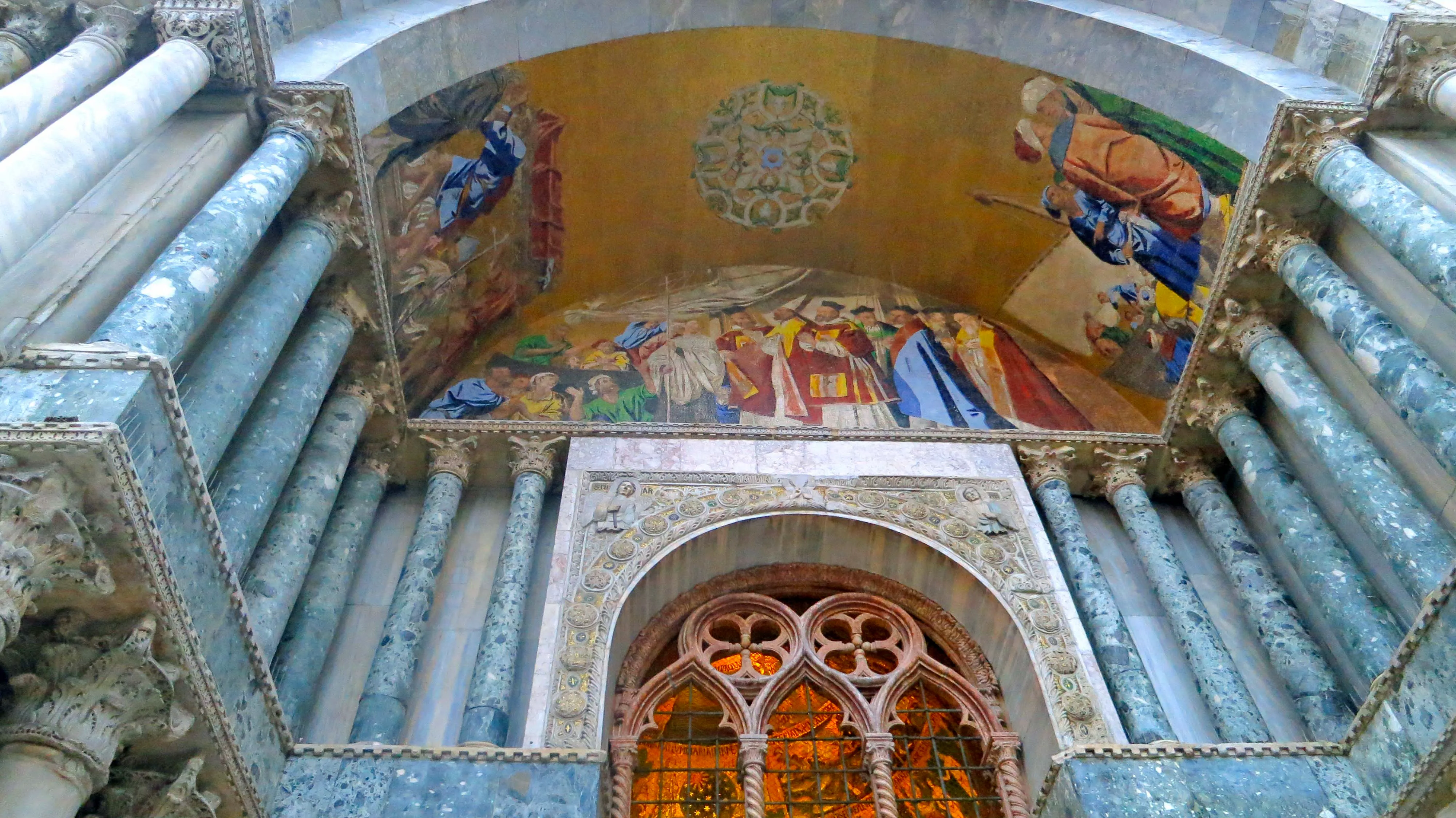
Conservators safeguard mosaics, marble, and fragile structures against humidity and time. Your respectful visit helps keep the basilica welcoming and calm.
Choose off‑peak hours, follow staff guidance, and remember that this is a living church as well as a masterpiece.
Nearby sights: Doge’s Palace and lagoon views
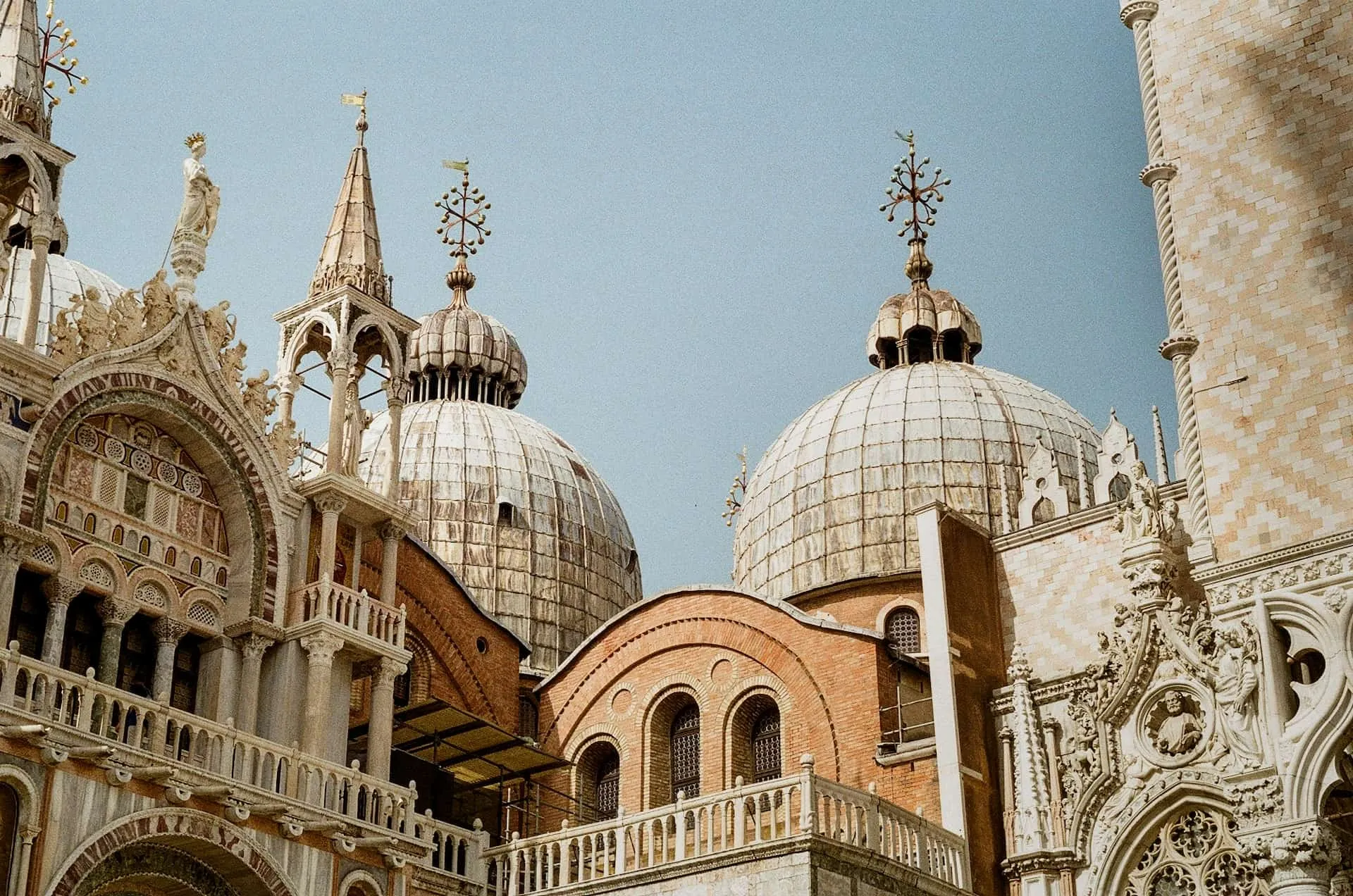
Next door, the Doge’s Palace opens onto courtyards, grand halls, and the Bridge of Sighs. Together with St. Mark’s, it completes Venice’s civic and sacred landscape.
From the Campanile, trace the Grand Canal, the Salute dome, and distant islands. The view ties the city’s landmarks into one serene panorama.
Why St. Mark’s matters
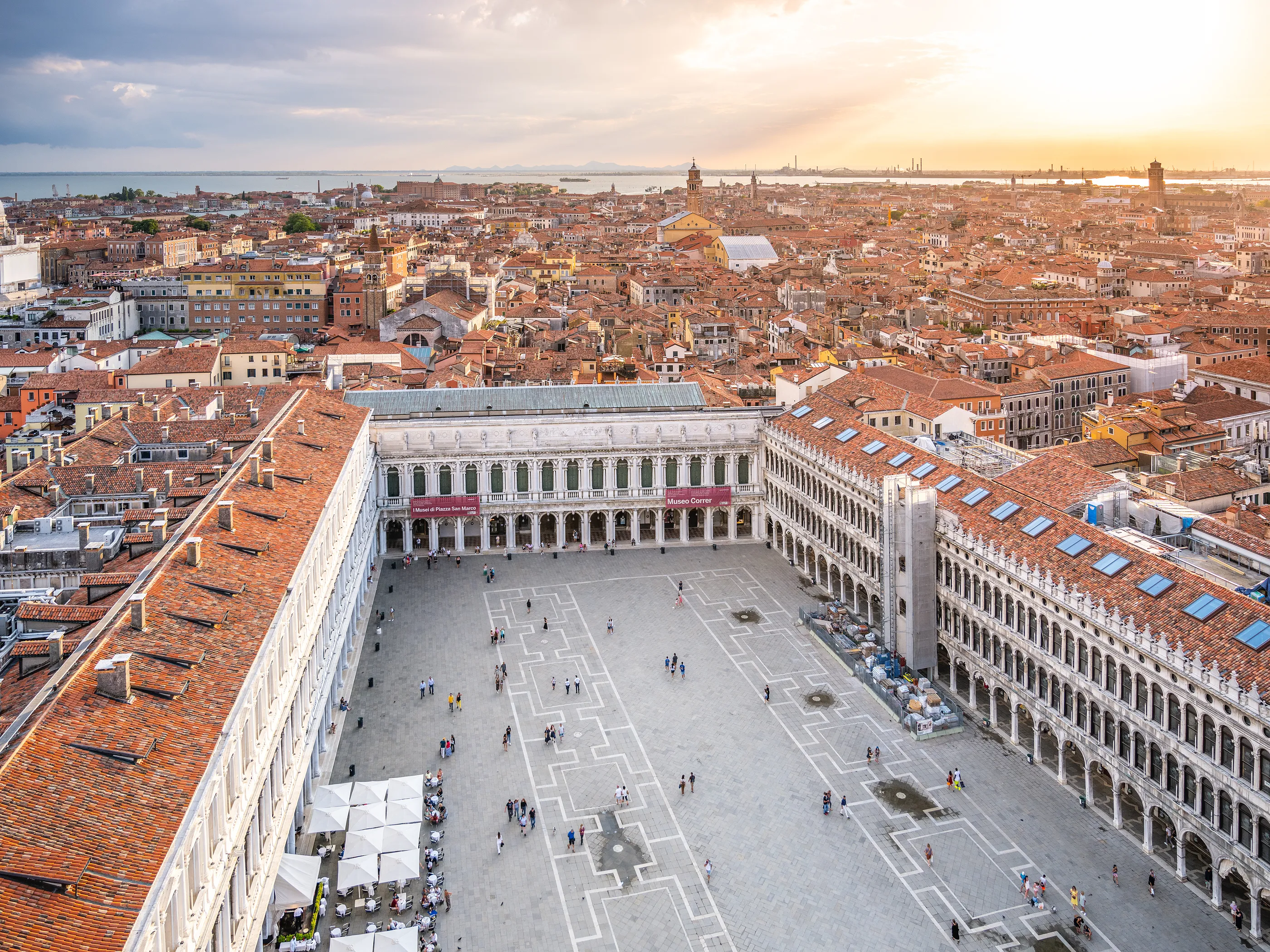
St. Mark’s gathers art, faith, and city life under domes that glow with gold. The Campanile’s quiet vantage reminds us that Venice is both delicate and enduring.
A visit connects you with centuries of stories — from processions and council meetings to quiet moments of prayer and the simple wonder of a view.
Table of Contents
Origins of St. Mark’s and the square
Legend tells that the relics of St. Mark the Evangelist reached Venice in the 9th century, carried from Alexandria and welcomed as a symbol of the city’s rising identity. Around them, a sanctuary grew, then a basilica, then the great stage of Piazza San Marco, where religion, politics, and everyday life intertwined.
Over centuries, the square became Venice’s open‑air living room: merchants haggled under arcades, officials proclaimed decrees, musicians played to the evening crowd. The basilica’s profile and the watchful bell tower anchored the city’s sense of place, and their stories became inseparable from Venice itself.
Building a Byzantine basilica
St. Mark’s isn’t a typical Italian cathedral. Rooted in Byzantine aesthetics, its five domes, golden interior, and intricate marble surfaces evoke connections to the Eastern Mediterranean and Venice’s seaborne empire. Craftsmen, mosaicists, and stonecutters worked across generations, enriching the church with images that shimmer like captured light.
The basilica’s fabric evolved with the city: new chapels, gilded vaults, and imported columns tell of trade routes and diplomatic gifts. The building became a living archive of Venice’s ambitions, faith, and artistry, reinterpreted with each generation that repaired, embellished, or carefully preserved its precious surfaces.
Mosaics, marble, and the Pala d’Oro
Inside, scenes gleam with tesserae — tiny glass and gold tiles forming biblical narratives, saints, and celestial patterns. Beneath your feet, a rippling marble pavement hints at the lagoon’s motion, while columns, capitals, and carved panels reveal a conversation between East and West.
The Pala d’Oro, a lavish altarpiece of gold and enamels, gathers delicate cloisons and precious stones into a single shimmering field. Its presence turns the sanctuary into a jewel‑box of light, an object of devotion and a masterwork of medieval craftsmanship.
The Campanile: rises, falls, and rises again
The Campanile stands slightly apart, a tranquil sentinel over the square. In 1902, after centuries of weather and subtle shifts, the tower collapsed — miraculously without major injury. Venice rebuilt it ‘as it was, where it was,’ and in 1912, the elevator brought visitors skyward once more.
From the belfry, the city opens like a chart: domes cross‑hatched below, the Grand Canal winding, lagoon islands pricked by light. On clear days, the horizon seems infinite; on misty ones, Venice gathers close, intimate and dreamlike.
Horses of St. Mark and the loggia
On the loggia, replicas of the bronze Horses of St. Mark gaze across the square. The originals — ancient and storied — are housed in the basilica’s museum. Their graceful forms hint at distant workshops and journeys through empires.
From the loggia, the square feels both grand and personal: a place of meetings and music, of pigeons and portraits, of everyday awe.
Ceremonies, processions, and city ritual
St. Mark’s hosted ceremonies that synchronized city and sea: blessings for sailors, processions for victories and losses, and rituals that wove governance with devotion. The basilica’s light turned civic moments into shared memory.
Even today, liturgies remind visitors that St. Mark’s is a living church. Respectful quiet, modest dress, and an attentive gaze make space for those who come to pray.
Piazza San Marco: power and everyday life
Around the basilica, the Doge’s Palace held councils and courts, orchestras played under cafés, and travelers gathered stories before pushing off into the Adriatic. Venice’s rituals unfolded here, against façades gilded by evening light.
The square is still Venice’s living room: a place to linger, listen, and watch the city be itself — unhurried, musical, and gently theatrical.
Acqua alta, maintenance, and accessibility
During acqua alta (high water), raised walkways may guide visitors across the square and into the basilica. Schedules can shift for safety, and some areas may close temporarily.
Accessibility is generally good: the Campanile has an elevator, and staff assist with basilica access. Some thresholds and narrow passages remain part of the historic fabric.
Art, music, and cultural echoes
Cafés and orchestras set a gentle soundtrack to the square. In the basilica, sacred music and the glow of mosaics create a hushed, resonant atmosphere.
Exhibitions and scholarly work continue to deepen our understanding of St. Mark’s — its art, its rituals, and its role in the city’s memory.
Visiting today: tickets and timings
Book Campanile tickets and basilica special areas online to secure your preferred time and reduce waiting.
Combined visits with the Doge’s Palace are popular and efficient — consider them if you want a fuller picture of Venice.
Conservation, respect, and sustainability
Conservators safeguard mosaics, marble, and fragile structures against humidity and time. Your respectful visit helps keep the basilica welcoming and calm.
Choose off‑peak hours, follow staff guidance, and remember that this is a living church as well as a masterpiece.
Nearby sights: Doge’s Palace and lagoon views
Next door, the Doge’s Palace opens onto courtyards, grand halls, and the Bridge of Sighs. Together with St. Mark’s, it completes Venice’s civic and sacred landscape.
From the Campanile, trace the Grand Canal, the Salute dome, and distant islands. The view ties the city’s landmarks into one serene panorama.
Why St. Mark’s matters
St. Mark’s gathers art, faith, and city life under domes that glow with gold. The Campanile’s quiet vantage reminds us that Venice is both delicate and enduring.
A visit connects you with centuries of stories — from processions and council meetings to quiet moments of prayer and the simple wonder of a view.